

Lower abdominal pain in women can have many possible causes. Sometimes the discomfort is related to a menstrual cycle, digestion, constipation, or a urinary tract infection (UTI). In other cases, lower stomach pain may be linked to an ovarian cyst, endometriosis, pelvic inflammatory disease, pregnancy-related complications, or another condition that needs medical evaluation.
The location, severity, timing, and associated symptoms can provide important clues. For example, lower abdominal pain with burning during urination may point toward a bladder infection, while sudden one-sided pelvic pain can have a gynecologic cause. Pain accompanied by a missed period, vaginal bleeding, dizziness, or fainting requires particular attention because an ectopic pregnancy can become a life-threatening emergency.

Quick Answer
Lower abdominal pain in women can come from the reproductive, urinary, digestive, or musculoskeletal systems. Common causes include menstrual cramps, ovulation pain, constipation, gas, UTIs, ovarian cysts, endometriosis, fibroids, and pelvic inflammatory disease. If the pain is sudden or severe, occurs during pregnancy or possible pregnancy, or comes with fainting, heavy bleeding, fever, persistent vomiting, or other serious symptoms, seek urgent medical care.
Because several different conditions can produce similar symptoms, persistent or unexplained lower abdominal pain should not simply be assumed to be menstrual cramps. A primary care clinician can evaluate the symptoms, perform an examination, order appropriate urine or blood testing, and determine whether imaging or referral to a gynecologist is needed.
Table of Contents
-
- What Is Lower Abdominal Pain in Women?
- Common Causes of Lower Abdominal Pain in Women
- Can Lower Abdominal Pain Happen Without a Period?
- Can a UTI Cause Lower Abdominal Pain?
- Lower Abdominal Pain and Pregnancy
- What Does One-Sided Lower Abdominal Pain Mean?
- Symptoms That May Occur With Lower Abdominal Pain
- When Is Lower Abdominal Pain an Emergency?
- When Should a Woman See a Doctor?
- How Is Lower Abdominal Pain Diagnosed?
- What Tests Might a Doctor Order?
- How Is Lower Abdominal Pain Treated?
- Can Lower Abdominal Pain Be Prevented?
- Can a Primary Care Doctor Help?
- Frequently Asked Questions
- Final Takeaway
What Is Lower Abdominal Pain in Women?
Lower abdominal pain refers to discomfort in the area below the belly button. In women, this region overlaps with the pelvis, so people may describe the same symptoms as lower stomach pain, pelvic pain, or lower abdominal cramps.
The pelvis contains several organs and structures, including the uterus, ovaries, fallopian tubes, bladder, and portions of the bowel. Pain in this area can therefore originate from several different systems.
Medical professionals may describe pelvic or lower abdominal pain as acute when it develops suddenly and lasts a relatively short time, or chronic when it continues or repeatedly returns over a longer period. Chronic pelvic pain is generally considered pain lasting six months or longer.
The pain itself may feel:
- Dull or aching
- Sharp or stabbing
- Cramp-like
- Burning
- Pressure or heaviness
- Constant or intermittent
The pattern matters. Pain associated with urination, bowel movements, sexual activity, menstruation, or certain movements can provide useful clues about its possible source. Pelvic pain can originate from reproductive, urinary, digestive, muscular, or other systems.
Common Causes of Lower Abdominal Pain in Women
There is no single cause of lower abdominal pain in women. Some causes are temporary and relatively minor, while others require prompt medical evaluation.
1. Menstrual Cramps
Menstrual cramps are one of the most familiar causes of lower abdominal cramps in women. They typically occur around the beginning of a menstrual period and may cause cramping in the lower abdomen or pelvis.
The discomfort may also spread into the lower back or thighs. Some women experience nausea, diarrhea, fatigue, or headaches along with menstrual cramps.
If menstrual pain is unusually severe, begins to interfere with normal activities, or changes significantly from your usual pattern, it is worth discussing with a healthcare professional. Conditions such as endometriosis, adenomyosis, fibroids, or other gynecologic problems can sometimes cause significant menstrual-related pain.
2. Ovulation Pain
Some women experience lower abdominal pain around the middle of their menstrual cycle when an ovary releases an egg. This is sometimes called mittelschmerz.
Ovulation pain may occur on one side of the lower abdomen and can last for a short period. It may be mild, although some women notice more noticeable cramping.
However, new or severe one-sided pain should not automatically be attributed to ovulation. Ovarian cysts, ectopic pregnancy, appendicitis, and other conditions can also cause one-sided abdominal or pelvic pain.
3. Urinary Tract Infection
A urinary tract infection, particularly a bladder infection, can cause lower abdominal discomfort. Typical symptoms may include burning when urinating, frequent urination, a strong urge to urinate, and cloudy, bloody, or strong-smelling urine.
Some women primarily notice pressure or discomfort in the lower abdomen rather than significant pain.
UTIs should be evaluated and treated because an untreated bladder infection can spread to the kidneys. Fever, chills, nausea, vomiting, or pain in the back or side can indicate a kidney infection and should prompt medical attention.
4. Constipation and Gas
Digestive problems are another common reason for lower stomach pain in women. Constipation can cause cramping, pressure, bloating, and difficulty passing stool.
Gas can also cause sharp or shifting abdominal discomfort. The pain may improve after passing gas or having a bowel movement.
If abdominal pain is persistent, severe, or accompanied by vomiting, significant abdominal swelling, blood in the stool, fever, or inability to pass stool or gas, medical evaluation is important.
5. Irritable Bowel Syndrome
Irritable bowel syndrome, or IBS, can cause recurring abdominal pain along with changes in bowel habits. Some people experience constipation, while others experience diarrhea or alternating constipation and diarrhea.
Bloating and abdominal discomfort are also common.
IBS is a chronic digestive condition, but lower abdominal pain should not automatically be attributed to IBS. New symptoms, worsening pain, unexplained weight loss, bleeding, fever, or other concerning symptoms may require additional evaluation.
6. Ovarian Cysts
Ovarian cysts are fluid-filled sacs or other tissue that develop on or in an ovary. Many ovarian cysts are benign and cause no symptoms, and some resolve without treatment.
When an ovarian cyst causes symptoms, a woman may experience a dull or sharp ache in the abdomen or pelvis. Larger cysts may cause pressure or discomfort.
A cyst can sometimes rupture or cause the ovary to twist. Torsion can produce sudden, severe pain, often on one side, and may require urgent medical treatment. A ruptured cyst can also cause sudden severe pain.
ACOG notes that ovarian cysts are common and that most are not cancerous, but symptoms such as sudden severe pain require medical evaluation.
7. Endometriosis
Endometriosis occurs when tissue similar to the lining of the uterus grows outside the uterus. It can cause pelvic pain, particularly around menstruation, but pain may occur at other times as well.
Some women experience pain during sexual activity, bowel movements, or urination. Endometriosis may also be associated with infertility.
Because symptoms vary significantly between individuals, persistent pelvic pain should be evaluated rather than assumed to be normal menstrual discomfort.
8. Uterine Fibroids
Fibroids are noncancerous growths in or around the uterus. Some women have no symptoms, while others may experience heavy menstrual bleeding, pelvic pressure, abdominal discomfort, or pain.
Larger fibroids may create a feeling of fullness or pressure in the lower abdomen.
If you have persistent lower abdominal pressure together with heavy or prolonged periods, pelvic symptoms, or changes in your menstrual pattern, discuss these symptoms with a healthcare professional.
9. Pelvic Inflammatory Disease
Pelvic inflammatory disease, or PID, is an infection involving the female reproductive organs. It can develop when certain infections travel upward from the vagina or cervix into the reproductive organs.
Symptoms may include lower abdominal or pelvic pain, abnormal vaginal discharge, painful sex, abnormal bleeding, fever, chills, nausea, or painful urination.
PID is important to diagnose and treat because it can lead to complications including infertility, ectopic pregnancy, and chronic pelvic pain.
10. Ectopic Pregnancy
An ectopic pregnancy occurs when a fertilized egg implants outside the uterus, most commonly in a fallopian tube.
Early symptoms may resemble other conditions and can include mild abdominal or pelvic pain, cramping on one side, a missed period, and abnormal vaginal bleeding.
If the fallopian tube ruptures, the woman may develop sudden severe abdominal or pelvic pain, shoulder pain, weakness, dizziness, or fainting. A ruptured ectopic pregnancy can cause life-threatening internal bleeding and requires emergency treatment.
11. Appendicitis
Appendicitis can cause abdominal pain that may eventually become concentrated in the lower right abdomen. Pain may become progressively worse and can occur with nausea, vomiting, fever, loss of appetite, or abdominal tenderness.
Because appendicitis can sometimes resemble gynecologic or digestive problems, worsening or severe abdominal pain should be evaluated promptly.
12. Kidney Stones
Kidney stones can cause severe pain that may radiate from the side or back toward the lower abdomen or groin. Pain can come in waves and may be accompanied by nausea, vomiting, or blood in the urine.
Urinary symptoms may also occur depending on where the stone is located.
13. Pelvic Floor Muscle Problems
Not all lower abdominal or pelvic pain comes from an internal organ. Muscles and connective tissues around the pelvis can also contribute to pain.
Pelvic floor muscle tension or spasms may cause pelvic pressure, aching, pain during intercourse, or discomfort associated with sitting, standing, or physical activity.
Musculoskeletal conditions and nerve irritation are also recognized causes of pelvic pain.

Can Lower Abdominal Pain Happen Without a Period?
Yes. Lower abdominal pain does not necessarily mean that a woman is about to have her period.
Abdominal pain without a period may be caused by ovulation, a UTI, constipation, gas, ovarian cysts, endometriosis, fibroids, PID, digestive conditions, or other problems.
Pregnancy should also be considered if pregnancy is possible. An ectopic pregnancy can cause lower abdominal or pelvic pain and may occur before a person realizes that she is pregnant.
The timing of the pain is therefore useful but not enough to determine the cause on its own.
Note:
If you have lower abdominal pain and there is a possibility that you could be pregnant, do not assume the pain is simply menstrual or digestive. Pregnancy testing and medical evaluation may be appropriate, particularly when pain occurs with vaginal bleeding, dizziness, fainting, or one-sided pelvic pain.
Can a UTI Cause Lower Abdominal Pain in Women?
Yes. A bladder infection can cause pain or discomfort in the lower abdomen.
A UTI becomes more likely when lower abdominal discomfort occurs with:
- Burning or pain during urination
- Frequent urination
- A strong or urgent need to urinate
- Passing only small amounts of urine
- Cloudy urine
- Blood in the urine
- Strong-smelling urine
However, not every case of lower abdominal pain is caused by a UTI. If urinary symptoms are absent, other causes should also be considered.
If a bladder infection spreads toward the kidneys, symptoms can become more serious. Fever, chills, nausea, vomiting, or pain in the back, side, or groin should be evaluated promptly.
Lower Abdominal Pain and Pregnancy
Pregnancy changes how lower abdominal and pelvic symptoms should be evaluated.
Mild abdominal discomfort can occur for many reasons during pregnancy, but abdominal or pelvic pain should not automatically be considered normal. Certain symptoms require urgent evaluation.
An ectopic pregnancy is particularly important to rule out when pregnancy is possible. It can initially cause mild pelvic or abdominal pain and may later cause severe pain if the pregnancy ruptures a fallopian tube.
Seek emergency care for possible pregnancy accompanied by:
- Sudden or severe abdominal or pelvic pain
- One-sided pelvic pain that is worsening
- Vaginal bleeding
- Shoulder pain
- Severe weakness
- Dizziness or fainting
ACOG recommends emergency evaluation when symptoms suggest a ruptured ectopic pregnancy because internal bleeding can become life-threatening.
What Does One-Sided Lower Abdominal Pain Mean?
Pain that is mainly on the left or right side of the lower abdomen can have several explanations.
Depending on the symptoms, possibilities can include:
- Ovulation pain
- Ovarian cyst
- Ovarian torsion
- Ectopic pregnancy
- Appendicitis
- Kidney stone
- Constipation or intestinal problems
- Muscle strain
The side of the pain alone cannot determine the diagnosis. Sudden severe one-sided pelvic pain, especially with nausea, vomiting, dizziness, fainting, or possible pregnancy, should receive urgent medical evaluation.
Symptoms That May Occur With Lower Abdominal Pain
The symptoms accompanying abdominal pain can help your healthcare provider narrow down possible causes.
| Additional Symptom | Possible Clues |
|---|---|
| Burning or frequent urination | UTI or another urinary condition |
| Abnormal vaginal discharge | Vaginal or reproductive tract infection, including PID |
| Heavy or unusual bleeding | Several possible gynecologic causes; pregnancy complications must also be considered |
| Bloating, constipation, or diarrhea | Digestive conditions such as constipation or IBS |
| Fever or chills | Possible infection |
| Pain during sex | Possible gynecologic or pelvic condition |
| Dizziness or fainting | Potential emergency, especially with pregnancy or bleeding |
These associations are not diagnoses. The same symptom can occur with several different conditions, which is why persistent, severe, or unexplained pain should be evaluated by a healthcare professional.
When Is Lower Abdominal Pain an Emergency?
Some causes of lower abdominal pain can become medical emergencies. Do not wait for a routine appointment if the pain is sudden, severe, rapidly worsening, or accompanied by serious symptoms.
Seek emergency medical attention for lower abdominal or pelvic pain accompanied by:
- Sudden severe abdominal or pelvic pain
- Fainting or near-fainting
- Severe dizziness or weakness
- Heavy vaginal bleeding
- Possible pregnancy with abdominal or pelvic pain
- Shoulder pain with possible pregnancy
- Severe or persistent vomiting
- High fever or chills with significant pain
- Severe abdominal tenderness
- Difficulty breathing or signs of serious illness
Sudden severe pelvic pain can occur with conditions such as a ruptured ectopic pregnancy or an ovarian cyst complication. ACOG specifically identifies sudden severe abdominal or pelvic pain, shoulder pain, weakness, dizziness, or fainting as warning signs of a possible ruptured ectopic pregnancy.
If symptoms appear life-threatening, call 911 or go to the nearest emergency department rather than waiting for a primary care appointment.
When Should a Woman See a Doctor?
You should consider making an appointment when lower abdominal pain is new, persistent, recurrent, worsening, or interfering with your normal activities.
A medical evaluation is particularly appropriate when:
- The pain keeps returning
- The pain is getting worse
- The cause is unclear
- You have urinary symptoms
- You have abnormal vaginal discharge
- You have unusual vaginal bleeding
- You have pain during sex
- You have changes in bowel habits
- You have fever or chills
- You could be pregnant
- The pain is affecting work, sleep, exercise, or daily activities
Chronic pelvic pain can involve more than one underlying condition, and evaluation may require looking at reproductive, urinary, digestive, and musculoskeletal causes.
How Is Lower Abdominal Pain Diagnosed?
There is no single test that diagnoses every cause of lower abdominal pain in women.
Your clinician will usually begin with a detailed medical history. You may be asked:
- When did the pain begin?
- Where exactly is the pain?
- Is it on one side or both sides?
- Is it sharp, dull, burning, or cramping?
- Is the pain constant or does it come and go?
- Does it occur around your menstrual cycle?
- Could you be pregnant?
- Do you have urinary symptoms?
- Have you noticed vaginal bleeding or discharge?
- Have you experienced constipation or diarrhea?
- Does anything make the pain better or worse?
- Have you had similar symptoms before?
Keeping a short record of when the pain occurs, its location, severity, menstrual timing, bowel or urinary symptoms, and other associated symptoms can make the medical evaluation more useful.
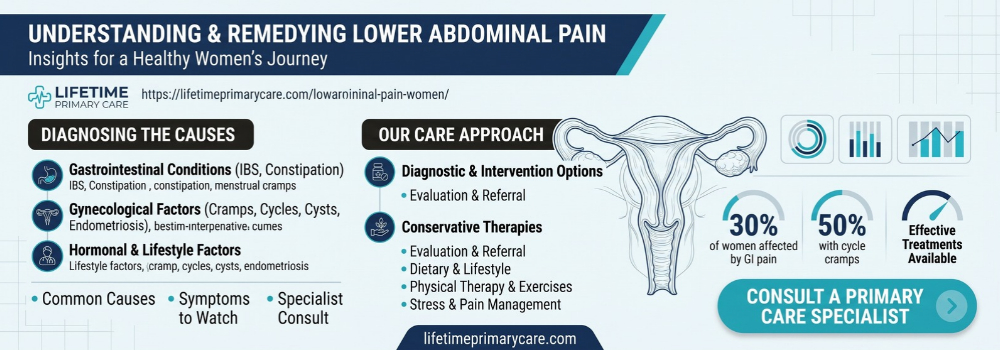
What Tests Might a Doctor Order for Persistent Lower Abdominal Pain?
The tests depend on your symptoms, age, medical history, pregnancy possibility, physical examination, and suspected cause.
Urine Testing
A urine test may be used when a UTI, kidney problem, or another urinary condition is suspected.
Urinalysis can look for signs of infection or blood in the urine. If a bladder infection is suspected, additional laboratory testing may be recommended depending on the clinical situation.
Pregnancy Test
A pregnancy test may be appropriate for women who could be pregnant, even if pregnancy does not seem likely based on symptoms alone.
Pregnancy status can significantly change how pelvic and abdominal pain is evaluated because ectopic pregnancy needs to be considered.
Blood Tests
Blood tests may help identify signs of infection, inflammation, anemia, or other conditions depending on the symptoms.
Pelvic Examination
A pelvic examination may be recommended when symptoms suggest a gynecologic cause. It can help identify tenderness, abnormal findings, or signs of infection.
Ultrasound
Pelvic ultrasound is commonly used when ovarian, uterine, or pregnancy-related causes are suspected. It can help evaluate structures such as the uterus and ovaries.
Other Imaging Tests
Depending on the suspected diagnosis, a clinician may recommend additional imaging such as CT or MRI. These tests may be useful when digestive, urinary, musculoskeletal, or other causes need further evaluation.
For chronic pelvic pain, possible evaluation can include a pelvic examination, laboratory testing, urine testing, ultrasound, MRI, or other imaging depending on the clinical situation.
At Lifetime Primary Care, diagnostic testing is available for a range of acute and chronic conditions, and the appropriate evaluation can be determined based on your symptoms and examination. Learn more about diagnostic testing at Lifetime Primary Care.
How Is Lower Abdominal Pain Treated?
Treatment depends entirely on the underlying cause.
For example, a UTI may require antibiotics, while constipation may improve with appropriate dietary and bowel-management measures. Menstrual-related pain may be managed differently from endometriosis, an ovarian cyst, PID, or another gynecologic condition.
Some causes require referral to a gynecologist or another specialist. Others can be evaluated and managed through primary care.
It is important not to start leftover antibiotics or someone else’s prescription medication simply because the symptoms resemble a previous UTI or infection. Different conditions can cause similar symptoms and may require completely different treatments.
If your clinician recommends an over-the-counter pain reliever, use it only as directed and consider your other medical conditions and medications. Some pain medicines may not be appropriate for everyone.
Can Lower Abdominal Pain Be Prevented?
Not every cause of lower abdominal pain can be prevented. However, several general health habits can reduce the risk of some conditions or help identify problems earlier.
- Stay adequately hydrated.
- Maintain regular bowel habits and address persistent constipation.
- Seek evaluation for urinary symptoms rather than repeatedly ignoring them.
- Practice safer sex to reduce the risk of sexually transmitted infections that can contribute to PID.
- Attend recommended preventive and women’s health visits.
- Keep track of unusual changes in your menstrual cycle.
- Seek medical attention when pelvic pain becomes persistent or progressively worse.
Preventive care is also an opportunity to discuss symptoms that may otherwise be easy to overlook.
Can a Primary Care Doctor Help With Lower Abdominal Pain?
Yes. A primary care doctor can be an appropriate first point of contact for many cases of lower abdominal pain in women, particularly when the cause is not immediately clear.
A primary care visit can include a review of your symptoms and medical history, physical examination, appropriate laboratory testing, pregnancy testing when indicated, urine testing, and other diagnostic evaluation. If your symptoms suggest a gynecologic, gastrointestinal, urinary, or other specialized condition, your primary care provider can help determine whether specialist care is appropriate.
At Lifetime Primary Care in Sugar Land, the practice provides family medicine and women’s healthcare, including evaluation of various gynecologic disorders. The clinic also offers diagnostic testing and urgent primary care for non-life-threatening conditions.
If you have lower abdominal pain that is persistent, recurrent, or concerning, you can request an appointment with Lifetime Primary Care to discuss your symptoms.
Need Help With Lower Abdominal Pain?
Persistent or unexplained lower abdominal pain deserves a proper evaluation. Lifetime Primary Care provides primary care and women’s healthcare in Sugar Land, Texas, including evaluation of acute symptoms and diagnostic testing.
16645 W Airport Blvd, Sugar Land, TX 77498
Monday–Friday: 8:30 AM–5:00 PM
Phone: (281) 313-0662
Frequently Asked Questions
What causes lower abdominal pain in women?
Common causes include menstrual cramps, ovulation pain, constipation, gas, UTIs, ovarian cysts, endometriosis, fibroids, PID, and digestive conditions. Pregnancy-related problems such as ectopic pregnancy can also cause lower abdominal or pelvic pain and require urgent evaluation when certain warning signs occur.
Why does my lower stomach hurt when I’m not on my period?
Lower stomach pain can occur even when you are not menstruating. Possible causes include ovulation, a UTI, constipation, gas, ovarian cysts, endometriosis, fibroids, PID, digestive conditions, or pregnancy-related problems. The associated symptoms and timing help determine what evaluation may be needed.
Can a UTI cause lower abdominal pain in women?
Yes. A bladder infection can cause discomfort or pain in the lower abdomen, particularly when it occurs with burning during urination, frequent urination, urgency, cloudy urine, blood in the urine, or strong-smelling urine.
Can ovarian cysts cause lower abdominal cramps?
Yes. Some ovarian cysts can cause a dull or sharp ache or discomfort in the lower abdomen or pelvis. A cyst that ruptures or causes ovarian torsion can produce sudden severe pain and requires prompt medical evaluation.
Can lower abdominal pain be an early sign of pregnancy?
Lower abdominal or pelvic discomfort can occur during pregnancy, but pain should not automatically be assumed to be a normal pregnancy symptom. Ectopic pregnancy can cause abdominal or pelvic pain, particularly when accompanied by abnormal bleeding or one-sided pain. Sudden severe pain, shoulder pain, weakness, dizziness, or fainting requires emergency evaluation.
When should a woman see a doctor for lower abdominal pain?
See a healthcare professional when pain is new, persistent, recurrent, worsening, unexplained, or interfering with daily activities. Seek urgent care for severe pain, fever, heavy bleeding, persistent vomiting, fainting, or possible pregnancy with significant abdominal or pelvic pain.
What tests might a doctor order for persistent lower abdominal pain?
Depending on the suspected cause, evaluation may include a physical or pelvic examination, urine testing, pregnancy testing, blood tests, ultrasound, or other imaging. The specific tests depend on your symptoms and medical history.
Can constipation cause lower abdominal pain in women?
Yes. Constipation can cause lower abdominal cramping, pressure, bloating, and discomfort. However, severe or persistent abdominal pain should not automatically be blamed on constipation, especially when other warning symptoms are present.
What does sudden lower abdominal pain mean?
Sudden pain can have many causes, ranging from gastrointestinal problems to ovarian cyst complications, kidney stones, appendicitis, or pregnancy-related emergencies. Severe or rapidly worsening pain should be evaluated urgently rather than diagnosed at home.
Can pelvic pain last for months?
Yes. Chronic pelvic pain can persist or recur for six months or longer. It can have more than one contributing cause, including endometriosis, IBS, urinary conditions, pelvic floor problems, fibroids, or other conditions. Persistent pain deserves medical evaluation.
Final Takeaway
Lower abdominal pain in women can come from many different parts of the body. Menstrual cramps, ovulation, constipation, gas, UTIs, ovarian cysts, endometriosis, fibroids, and other conditions can all cause lower stomach or pelvic discomfort.
The most important clues are the location and character of the pain, when it occurs, whether it is related to your menstrual cycle, and whether other symptoms are present.
Do not ignore sudden or severe lower abdominal pain, particularly if you could be pregnant or if you have vaginal bleeding, dizziness, fainting, fever, persistent vomiting, or other serious symptoms. These symptoms can sometimes indicate conditions requiring immediate medical attention.
For pain that is persistent, recurrent, or unexplained, a primary care evaluation can help determine the next step. Depending on the findings, your clinician may perform laboratory testing, urine testing, imaging, or recommend evaluation by a gynecologist or another specialist.
If you are in Sugar Land or the surrounding Houston area and need evaluation for lower abdominal pain or another non-life-threatening concern, contact Lifetime Primary Care to schedule a visit.
Medical Sources
American College of Obstetricians and Gynecologists.
Ectopic Pregnancy
— Information about symptoms, diagnosis, and emergency warning signs of ectopic pregnancy.
American College of Obstetricians and Gynecologists.
Ovarian Cysts
— Information about ovarian cysts, symptoms, complications, and evaluation.
American College of Obstetricians and Gynecologists.
Chronic Pelvic Pain
— Information about chronic pelvic pain and its possible reproductive, urinary, digestive, and musculoskeletal causes.
American College of Obstetricians and Gynecologists.
Pelvic Inflammatory Disease
— Information about PID symptoms, diagnosis, and possible complications.
National Institute of Diabetes and Digestive and Kidney Diseases.
Symptoms & Causes of Bladder Infection in Adults
— Information about UTI symptoms, lower abdominal discomfort, and kidney infection warning signs.
Mayo Clinic.
Pelvic Pain: Causes and Definition
— Overview of reproductive, urinary, digestive, and musculoskeletal causes of pelvic pain.
Mayo Clinic.
Chronic Pelvic Pain: Diagnosis and Treatment
— Information about clinical evaluation, laboratory testing, pelvic examination, ultrasound, MRI, and other diagnostic approaches.
Medical Disclaimer
This article is for educational purposes only and is not a substitute for professional medical advice, diagnosis, or treatment. Lower abdominal or pelvic pain can have many different causes, and symptoms alone cannot establish a diagnosis. If you have severe, sudden, worsening, or unexplained pain, possible pregnancy, heavy bleeding, fainting, fever, persistent vomiting, or other concerning symptoms, seek appropriate medical care promptly. If you believe you are experiencing a medical emergency, call 911 or go to the nearest emergency department.