

Seeing blood in your urine can be alarming, especially when it happens at the same time as lower back pain. Sometimes the cause is something treatable, such as a urinary tract infection or kidney stone. In other cases, blood in the urine may be related to a kidney condition, urinary tract problem, medication, injury, or another condition that needs medical evaluation.
Blood in urine with lower back pain should not be ignored. The combination does not automatically mean you have a kidney stone or UTI, and the location, severity, timing, and other symptoms can help point toward the underlying cause. A healthcare professional may use a urine test, medical history, physical examination, blood tests, and sometimes imaging to determine what is happening.

Quick Answer: Blood in urine and lower back pain can occur with kidney stones, urinary tract infections, kidney infections, urinary tract inflammation, injury, and several other conditions. If you can see blood in your urine, especially with significant back or side pain, fever, chills, vomiting, difficulty urinating, or severe pain, seek prompt medical evaluation. Severe symptoms or signs of a serious infection may require emergency care.
Table of Contents
- What Does Blood in Urine With Lower Back Pain Mean?
- Common Causes of Blood in Urine and Back Pain
- Could It Be a Kidney Stone?
- Can a UTI Cause Blood in Urine and Back Pain?
- Kidney Infection: An Important Possibility
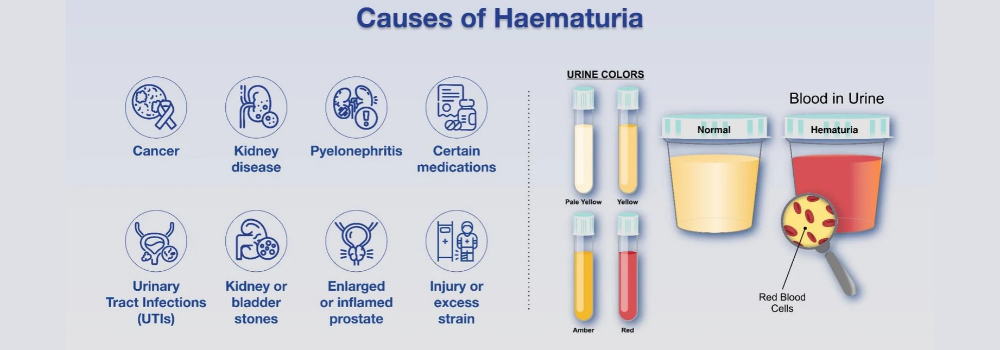
- Other Possible Causes of Hematuria
- Symptoms That May Help Identify the Cause
- When Is Blood in Urine an Emergency?
- How Is Blood in Urine With Back Pain Diagnosed?
- What Tests Might a Doctor Order?
- How Is It Treated?
- What Can You Do While Waiting to Be Evaluated?
- What Doctor Should You See?
- How Lifetime Primary Care Can Help
- Frequently Asked Questions
- The Bottom Line
- Medical Sources
What Does Blood in Urine With Lower Back Pain Mean?
Blood in the urine is called hematuria. It can be visible to the naked eye, called gross hematuria, or detected only through a urine test, called microscopic hematuria.
Visible blood may make urine appear pink, red, or brown. You may notice only a slight change in color, or the urine may look obviously bloody. Even a relatively small amount of blood can change the appearance of urine.
Lower back pain adds another important clue. Because the kidneys are located toward the back of the upper abdomen, conditions affecting the kidneys or ureters can sometimes cause pain in the back or side. However, ordinary muscular or spinal back pain can occur at the same time as a separate urinary problem, so the two symptoms do not always have the same cause.
When blood in urine and back pain occur together, some of the possibilities include:
- Kidney stones
- A urinary tract infection
- A kidney infection
- Bladder or urinary tract inflammation
- Kidney disease
- Urinary tract injury
- Enlarged prostate in men
- Certain medications or bleeding disorders
- Less commonly, tumors or cancers involving the urinary tract
NIDDK notes that hematuria can originate from different parts of the urinary tract, including the kidneys, ureters, bladder, and urethra. Finding the cause is therefore more important than simply treating the blood itself.
Common Causes of Blood in Urine and Back Pain
Several conditions can produce this combination of symptoms. Some are relatively common and treatable, while others require more extensive evaluation.
1. Kidney stones
Kidney stones are one of the most recognizable causes of blood in urine combined with significant back or side pain. A stone can irritate the urinary tract as it moves from the kidney toward the bladder, leading to bleeding and pain.
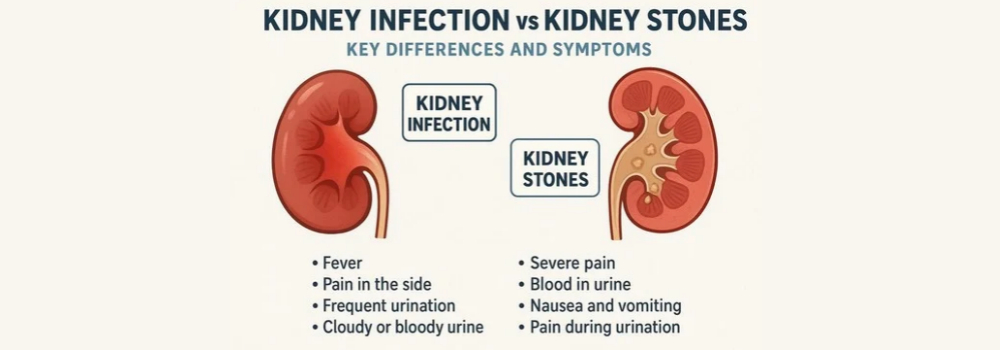
Stone pain is often sharp and may occur in waves. It can begin in the back or side and move toward the lower abdomen or groin. Some people also experience nausea, vomiting, urinary urgency, or pain when urinating.
Blood may appear pink, red, or brown, although some people have microscopic blood that is visible only on testing.
2. Urinary tract infection
A bladder infection can cause blood in the urine along with burning when urinating, frequent urination, urgency, lower abdominal discomfort, cloudy urine, or strong-smelling urine.
Back pain is more concerning when it occurs with a urinary infection because it may indicate that the infection has reached the kidneys.
If you are experiencing burning when urinating along with urinary frequency or urgency, you may also want to read our guide on burning when urinating.
3. Kidney infection
A kidney infection, also called pyelonephritis, can develop when bacteria reach the kidneys. It may cause blood in the urine, pain in the back or side, fever, chills, nausea, vomiting, and urinary symptoms.
A kidney infection should be evaluated promptly because an untreated infection can become more serious.
4. Kidney or urinary tract inflammation
Inflammation involving the kidneys or urinary tract can cause microscopic or visible blood in the urine. Some kidney diseases affect the tiny filtering structures inside the kidneys and may cause blood or protein to appear in the urine.
These conditions cannot be diagnosed based on symptoms alone. Urine and blood testing may be needed to determine whether the kidneys themselves are being affected.
5. Urinary tract injury
An injury involving the kidneys, bladder, or urinary tract can sometimes cause hematuria. This may happen after an accident, fall, sports injury, or other trauma.
Blood in the urine after significant trauma should be medically evaluated, particularly if there is severe pain, weakness, dizziness, abdominal pain, or difficulty urinating.
Could It Be a Kidney Stone?
Yes. A kidney stone is one possible explanation for blood in urine with back or side pain, but symptoms alone cannot confirm that you have a stone.
Kidney stones form when certain minerals and salts become concentrated in urine and form hard deposits. A small stone may pass without causing noticeable symptoms. A stone that moves into the ureter can cause significant pain or urinary bleeding.
Classic kidney stone symptoms can include:
- Sharp pain in the back or side
- Pain that moves toward the lower abdomen or groin
- Pain that comes and goes in waves
- Pink, red, or brown urine
- Pain or burning with urination
- A frequent or persistent urge to urinate
- Nausea or vomiting
- Difficulty passing urine
NIDDK specifically identifies sharp back, side, lower abdominal, or groin pain and pink, red, or brown urine as possible kidney stone symptoms. Fever and chills can also occur, particularly when infection is present. NIDDK: Kidney Stone Symptoms and Causes
Important: Severe pain plus fever or chills can be more concerning than a kidney stone alone because an obstructed urinary tract can be associated with infection. Prompt medical evaluation is important when these symptoms occur together.
Blood in urine does not prove that you have a kidney stone. Other urinary conditions can cause hematuria, which is why testing is important.
Can a UTI Cause Blood in Urine and Back Pain?
Yes. A UTI can cause blood in the urine. A bladder infection may cause urine to appear pink, red, or contain microscopic blood. It can also cause burning during urination, urinary urgency, frequent urination, lower abdominal discomfort, cloudy urine, or a strong urine odor.
However, the type and location of the pain matter.
A simple bladder infection more commonly causes discomfort in the lower abdomen or pelvic area. Pain in the back or side, especially when accompanied by fever, chills, nausea, or vomiting, raises concern for a kidney infection.
ACOG notes that UTIs can cause urine to be tinged with blood and that kidney infections may cause back pain, chills, fever, nausea, and vomiting.
If you have symptoms that resemble a UTI, a urine test can help determine whether an infection is present. At Lifetime Primary Care, in-office diagnostic testing includes urinalysis.
Kidney Infection: An Important Possibility
A kidney infection deserves particular attention when blood in urine occurs with back or side pain.
Kidney infections often begin as infections lower in the urinary tract. Bacteria can travel upward and reach the kidneys. Once the kidneys are involved, symptoms may become more significant.
Possible signs include:
- Back or side pain
- Fever
- Chills or shaking
- Nausea or vomiting
- Burning with urination
- Frequent or urgent urination
- Cloudy or bloody urine
- Feeling unusually weak or ill
A kidney infection needs prompt medical treatment. If you have urinary symptoms together with fever, chills, vomiting, or significant back or side pain, do not simply assume that you have an uncomplicated bladder infection.
Other Possible Causes of Hematuria
Kidney stones and infections are important causes, but they are not the only possibilities.
Kidney disease
Some diseases affecting the kidney’s filtering structures can cause blood or protein to appear in urine. These conditions may produce few symptoms at first and may require blood and urine testing to identify.
Bladder conditions
Inflammation or other disorders involving the bladder can cause hematuria. Some bladder conditions also cause urgency, frequency, pelvic discomfort, or painful urination.
Enlarged prostate
In men, benign prostatic hyperplasia, or an enlarged prostate, can cause urinary symptoms and sometimes blood in the urine. Difficulty starting urination, a weak urine stream, frequent urination, or incomplete bladder emptying may occur.
Medications
Certain medicines, including some blood-thinning medications, may contribute to bleeding or make bleeding more noticeable. However, being on a blood thinner does not mean visible blood in urine should automatically be dismissed. The underlying cause may still need evaluation.
Physical injury
Trauma to the kidneys or urinary tract can cause hematuria. If blood appears after an accident or significant impact, seek medical assessment.
Urinary tract cancers
Less commonly, blood in the urine can be associated with cancers involving the bladder, kidney, or prostate. This is one reason visible blood in urine should be evaluated even when there is little or no pain.
Most people with blood in the urine do not have cancer, but hematuria should not be ignored simply because the amount of blood is small or the symptom disappears.
Symptoms That May Help Identify the Cause
The combination of symptoms can provide useful clues, although only medical evaluation can establish a diagnosis.
| Symptoms | Possible Causes |
|---|---|
| Blood in urine + sharp side/back pain | Kidney stone is one possibility |
| Blood in urine + burning + frequent urination | UTI or bladder infection |
| Blood in urine + back pain + fever/chills | Possible kidney infection; prompt evaluation is important |
| Blood in urine + difficulty urinating | Stone, obstruction, prostate problem, or another urinary condition |
| Blood in urine without pain | Several possibilities, including urinary tract conditions that still require evaluation |
| Back pain without urinary symptoms | Muscle or spine problems are common, although kidney causes are possible |
Back pain by itself is extremely common and may come from muscles, joints, discs, or other structures. When it occurs with blood in urine, however, urinary and kidney causes deserve consideration.
When Is Blood in Urine an Emergency?
Blood in urine should be medically evaluated, and certain combinations of symptoms require urgent or emergency care.
Seek urgent medical attention if you have blood in your urine along with:
- Severe or rapidly worsening back, side, abdominal, or groin pain
- Fever or chills
- Repeated vomiting or inability to keep fluids down
- Difficulty passing urine or inability to urinate
- Large amounts of visible blood
- Blood clots in the urine
- Severe weakness, dizziness, fainting, or confusion
- Recent significant trauma involving the abdomen, back, or pelvis
Kidney stones can sometimes obstruct urine flow, and an obstructed urinary tract combined with infection can become a serious medical problem. NIDDK recommends seeking care right away for kidney stone symptoms such as severe pain or bleeding, while Mayo Clinic advises urgent evaluation for blood in urine, severe stone pain, vomiting, fever/chills, or difficulty passing urine.
Emergency warning: If you have severe pain, high fever, confusion, fainting, uncontrolled vomiting, inability to urinate, or symptoms that make you feel seriously ill, do not wait for a routine primary care appointment. Seek emergency medical care or call 911 when appropriate.
How Is Blood in Urine With Back Pain Diagnosed?
The first step is determining whether there is actually blood in the urine and then identifying where it may be coming from.
Your healthcare professional may ask about:
- When the blood first appeared
- Whether the urine is pink, red, or brown
- Whether you have pain while urinating
- How often you are urinating
- Where the back pain is located
- Whether the pain is constant or comes in waves
- Whether the pain travels toward the groin
- Whether you have fever, chills, nausea, or vomiting
- Recent injuries or procedures
- Current medications
- Previous kidney stones or UTIs
Your medical history and physical examination help determine which tests are appropriate.
What Tests Might a Doctor Order?
Urinalysis
A urinalysis is commonly used to check for blood and other substances in urine. It can also provide clues about infection, inflammation, kidney problems, or other urinary conditions.
Lifetime Primary Care offers in-office diagnostic testing, including urinalysis and routine blood work.
Urine culture
If a UTI is suspected, a urine culture may be used to identify bacteria and help guide antibiotic treatment.
Blood tests
Blood testing may help evaluate kidney function, infection, anemia, inflammation, or other conditions depending on your symptoms and medical history.
Imaging
If a kidney stone, obstruction, kidney condition, or another structural problem is suspected, imaging may be necessary. Depending on the situation, this may include ultrasound or CT imaging.
Additional evaluation
If hematuria persists or its cause remains unclear, a healthcare professional may recommend additional evaluation, sometimes involving a urologist. The exact testing depends on your age, symptoms, risk factors, medical history, and initial test results.
How Is It Treated?
There is no single treatment for blood in urine because hematuria is a symptom rather than a disease itself. Treatment depends on the underlying cause.
UTI or kidney infection
Bacterial urinary infections are commonly treated with antibiotics. Kidney infections require prompt treatment and may require a different treatment approach depending on severity.
Kidney stones
Treatment depends on the stone’s size, location, symptoms, and whether it is causing obstruction or other complications. Some small stones can pass naturally, while larger or obstructing stones may require medical procedures.
Kidney disease
If testing suggests a kidney disorder, treatment focuses on the specific condition and may involve additional laboratory testing or referral to a kidney specialist.
Other causes
Blood in urine caused by prostate problems, medications, injury, inflammation, or another urinary condition requires treatment directed at that underlying problem.
It is important not to take leftover antibiotics simply because you have blood in your urine. Antibiotics are appropriate for certain bacterial infections, but they will not treat kidney stones or every other cause of hematuria.
What Can You Do While Waiting to Be Evaluated?
If you have blood in your urine and back pain, the most important step is arranging appropriate medical evaluation rather than trying to diagnose the cause yourself.
While waiting for care, keep track of your symptoms. Note the urine color, whether the blood is visible, where the pain occurs, whether the pain changes or moves, and whether you develop fever, chills, nausea, vomiting, burning with urination, or difficulty urinating.
Drink fluids normally unless a healthcare professional has told you to restrict fluids because of another medical condition. Avoid taking medications that you cannot safely use based on your medical history.
If your symptoms become severe or you develop emergency warning signs, do not wait for a routine appointment.
What Doctor Should You See for Blood in Urine and Back Pain?
A primary care doctor is often a good starting point for evaluating blood in urine with back pain. Primary care can review your symptoms, perform an examination, order initial urine or blood testing, and determine whether you need imaging or referral to a specialist.
A urologist may become involved when hematuria requires more specialized urinary tract evaluation, particularly when blood persists, recurs, or the initial evaluation does not identify the cause.
A nephrologist may be appropriate when testing suggests that the kidneys’ filtering function is affected by a medical kidney disease.
The right specialist depends on the suspected cause. You do not necessarily need to start with a specialist if a primary care evaluation can safely begin the diagnostic process.
How Lifetime Primary Care Can Help
If you are in Sugar Land, Texas, Lifetime Primary Care provides primary care evaluation for many urinary and acute health concerns. The practice offers in-office diagnostic testing, including urinalysis and routine blood work, which can be useful when evaluating urinary symptoms.
The clinic also provides walk-in and same-day primary care for non-life-threatening concerns. The practice specifically lists pain with urination and urinary frequency among symptoms treated at its walk-in clinic.
Lifetime Primary Care is located at 16645 W Airport Blvd, Sugar Land, TX 77498, and is open Monday through Friday from 8:30 AM to 5:00 PM.
Need Evaluation for Blood in Your Urine?
Blood in urine with back pain deserves appropriate medical evaluation, especially if symptoms are new or worsening. Lifetime Primary Care can help assess your symptoms and determine whether diagnostic testing or additional medical care is needed.
Frequently Asked Questions
Why do I have blood in my urine and lower back pain?
Blood in urine with lower back pain can occur with kidney stones, urinary tract infections, kidney infections, kidney disease, urinary tract inflammation, injury, and other conditions. A kidney stone is one possibility, particularly when the pain is sharp, severe, or occurs in waves, but symptoms alone cannot confirm the cause.
Can a UTI cause blood in urine and back pain?
Yes. A UTI can cause blood in the urine, burning with urination, urinary frequency, and urgency. Back or side pain, particularly with fever, chills, nausea, or vomiting, can indicate that the infection has reached the kidneys and should be evaluated promptly.
Does blood in urine mean I have a kidney stone?
No. Kidney stones can cause blood in urine, but hematuria has many possible causes. UTIs, kidney infections, kidney disease, urinary tract inflammation, injury, medications, prostate conditions, and other urinary tract problems can also cause blood in urine.
When is blood in urine an emergency?
Seek emergency or urgent medical care when blood in urine occurs with severe or rapidly worsening pain, fever or chills, repeated vomiting, inability to urinate, significant bleeding or blood clots, fainting, confusion, severe weakness, or other symptoms suggesting a serious illness.
What does kidney stone pain feel like?
Kidney stone pain can be sharp and severe, often affecting the back or side and sometimes moving toward the lower abdomen or groin. The pain may come in waves and can occur with nausea, vomiting, urinary symptoms, or blood in the urine.
Can a kidney infection cause blood in urine?
Yes. A kidney infection can cause blood in the urine along with back or side pain, fever, chills, nausea, vomiting, burning during urination, and increased urinary frequency or urgency.
What test checks for blood in urine?
A urinalysis can detect blood in urine, including microscopic blood that cannot be seen with the naked eye. Depending on the results and symptoms, additional urine tests, blood tests, or imaging may be needed to determine the cause.
What doctor should I see for blood in urine and back pain?
A primary care doctor can often perform the initial evaluation, order urine and blood testing, and determine whether imaging or specialist care is needed. A urologist may be recommended when specialized urinary tract evaluation is necessary.
The Bottom Line
Blood in urine with lower back pain can have several causes, and a kidney stone is only one of them. UTIs, kidney infections, kidney disease, urinary tract inflammation, injury, prostate conditions, and other problems can also cause hematuria.
The combination of symptoms becomes particularly important when you also have fever, chills, vomiting, severe pain, difficulty urinating, or significant visible bleeding. These symptoms should not be ignored.
If you notice blood in your urine, even if the amount is small or the symptom goes away, talk with a healthcare professional about whether you need testing. A simple urinalysis can be an important first step toward identifying the cause.
If you are looking for primary care in Sugar Land, Lifetime Primary Care can evaluate urinary symptoms and provide appropriate initial diagnostic testing when indicated.
Medical Sources
Medical Sources
NIDDK: Hematuria (Blood in the Urine) — information about visible and microscopic hematuria, causes, diagnosis, and treatment.
NIDDK: Bladder Infection (Urinary Tract Infection—UTI) in Adults — UTI symptoms, causes, diagnosis, and treatment.
MedlinePlus: Urine – bloody — causes of blood in urine and when to contact a healthcare professional.
NIDDK: Symptoms & Causes of Kidney Stones — kidney stone symptoms including back/side pain and blood in urine.
ACOG: Urinary Tract Infections — UTI symptoms and kidney infection warning signs.
Mayo Clinic: Kidney Stones: Symptoms and Causes — symptoms, warning signs, and causes of kidney stones.
Medical Disclaimer: This article is intended for general educational purposes only and does not replace professional medical advice, diagnosis, or treatment. Blood in the urine can have many causes, and symptoms alone cannot determine the underlying condition. If you have new, persistent, or visible blood in your urine, speak with a qualified healthcare professional. Seek emergency medical attention for severe pain, inability to urinate, significant bleeding, fainting, confusion, severe weakness, or other symptoms of a medical emergency.