

If you recently received an A1C result of 6.5%, 7%, 8%, or higher, you may be wondering what the number actually means. Is an A1C of 6.5 diabetes? Is 7% too high? How dangerous is an A1C of 8%? And what can you do if your A1C keeps increasing?
Your A1C is more than just a number on a lab report. It gives your healthcare provider an estimate of your average blood glucose levels over roughly the previous 2 to 3 months. The higher the A1C, the higher your average blood glucose has generally been.
For diagnosis, an A1C below 5.7% is considered normal, 5.7% to 6.4% is in the prediabetes range, and 6.5% or higher is in the diabetes range. However, if you do not have clear symptoms of diabetes, a diabetes-range A1C generally needs to be confirmed with repeat testing or another appropriate diabetes test.

Quick Answer: What Do A1C Numbers Mean?
An A1C below 5.7% is generally considered within the normal range.
Readings from 5.7% to 6.4% fall into the prediabetes range, meaning blood glucose levels are higher than normal but have not reached the diabetes threshold.
Once the result reaches 6.5% or higher, it falls within the diabetes range for diagnosis. If you do not have clear symptoms, your healthcare provider will typically confirm the result with repeat testing or another diabetes test.
For many adults already diagnosed with diabetes, a level around 7% or below is a common treatment goal. However, the right target can differ based on your overall health, diabetes history, medications, and risk of low blood sugar.
When the result reaches 8% or higher, it generally indicates that average blood glucose has been above the desired range over time. This does not necessarily mean there is an immediate emergency, but it is a good reason to discuss your diabetes management and treatment plan with your healthcare provider.
Important: An A1C result should be interpreted in context. Your age, other medical conditions, medications, risk of low blood sugar, diabetes history, and other factors can affect what your personal A1C goal should be.
Table of Contents
- What Is an A1C Test?
- What Is the Normal A1C Range?
- What Does an A1C of 6.5% Mean?
- What Does an A1C of 7% Mean?
- What Does an A1C of 8% Mean?
- What If Your A1C Is Higher Than 8%?
- How Does A1C Relate to Average Blood Sugar?
- Are There Symptoms of a High A1C?
- Why Does A1C Increase?
- When Should You See a Doctor About Your A1C?
- How Is a High A1C Evaluated?
- How Can You Lower Your A1C?
- Can a Primary Care Doctor Help Lower Your A1C?
- Frequently Asked Questions
- Final Takeaway
What Is an A1C Test?
The A1C, also called hemoglobin A1C or HbA1c, is a blood test that measures the percentage of hemoglobin in your red blood cells that has glucose attached to it. Because red blood cells generally circulate for several months, the test provides a picture of your average blood glucose over approximately the previous 2 to 3 months.
Unlike a fasting blood glucose test, you generally do not need to fast before an A1C test. This makes A1C a convenient test for screening, diagnosing type 2 diabetes and prediabetes, and monitoring diabetes after diagnosis.
One important point is that an A1C is an average. It does not show every high or low blood sugar reading you experienced. Two people could have the same A1C while having very different daily glucose patterns.
That is why your healthcare provider may consider your A1C together with home glucose readings, fasting glucose, symptoms, medications, diet, activity level, and other laboratory results.
What Is the Normal A1C Range?
For nonpregnant adults, the commonly used A1C categories are:
| A1C Level | What It Generally Means |
|---|---|
| Below 5.7% | Normal range |
| 5.7%–6.4% | Prediabetes range |
| 6.5% or higher | Diabetes range |
These categories are used to help diagnose prediabetes and diabetes. A person without obvious symptoms generally needs confirmatory testing before a diabetes diagnosis is made.
A1C Is Not the Same as a Single Blood Sugar Reading
An A1C of 7% does not mean your blood sugar was exactly 154 mg/dL every day. It represents an estimated average glucose level over time. Your actual glucose may move substantially above and below that average during the day.
What Does an A1C of 6.5% Mean?
An A1C of 6.5% is important because it is the threshold used to identify diabetes in standard diagnostic criteria. If you have an A1C of 6.5% and do not have clear symptoms of diabetes, your healthcare provider may repeat the A1C or use another diabetes test to confirm the result.
An A1C of 6.5% corresponds to an estimated average glucose of approximately 140 mg/dL. This does not mean your blood sugar stays at 140 mg/dL throughout the day; it is simply an estimated average based on the A1C result.
If you have already been diagnosed with diabetes, an A1C of 6.5% may represent good control for many people. However, whether it is the right target for you depends on your individual health situation.
For someone who has never been diagnosed with diabetes, however, an A1C of 6.5% should not simply be ignored. It is a reason to discuss the result with a healthcare professional and determine whether additional testing is appropriate.
What Does an A1C of 7% Mean?
An A1C of 7% is within the diabetes range, but its meaning depends heavily on whether you are being tested for diabetes or already have a diabetes diagnosis.
If you do not have a previous diagnosis, an A1C of 7% is in the diabetes range and should be medically evaluated and confirmed when appropriate.
If you already have diabetes, an A1C of 7% is around the commonly recommended goal for many adults. The American Diabetes Association notes that an A1C of 7% or less is a common target for many people living with diabetes, but goals should be individualized.
For example, a healthcare provider may choose a different target for an older adult, someone with a long history of diabetes, someone at increased risk of hypoglycemia, or someone with certain other health conditions.
So, is an A1C of 7% dangerous? Not necessarily. For many people with diabetes, 7% is an appropriate treatment goal. What matters is whether that level is appropriate for your particular health situation and whether it is stable or increasing over time.
What Does an A1C of 8% Mean?
An A1C of 8% means your average blood glucose has generally been higher than the level recommended for many people with diabetes. An A1C of 8% corresponds to an estimated average glucose of about 183 mg/dL.
For someone already living with diabetes, an A1C of 8% often means the current diabetes management plan may need to be reviewed. That does not necessarily mean your treatment has failed. Blood glucose can become harder to control for many reasons, including changes in insulin sensitivity, medications, activity, diet, illness, stress, or progression of diabetes.
It is also important not to panic over one result. Your healthcare provider will usually look at the trend. An A1C that has gradually increased from 6.8% to 7.4% to 8.0%, for example, tells a different story from a single unexpected result that does not match your home glucose readings.
An A1C of 8% is not generally an emergency by itself. However, it should be taken seriously because persistently elevated blood glucose is associated with a higher risk of diabetes-related complications over time.
What If Your A1C Is Higher Than 8%?
The higher your A1C goes above your individualized target, the more important it becomes to review your diabetes care plan with your healthcare provider.
| A1C | Estimated Average Glucose | General Interpretation |
|---|---|---|
| 6.5% | About 140 mg/dL | Diabetes range for diagnosis |
| 7% | About 154 mg/dL | Common goal for many people with diabetes |
| 8% | About 183 mg/dL | Above the common goal for many adults |
| 9% | About 212 mg/dL | Significantly above the common goal |
| 10% | About 240 mg/dL | Markedly elevated average glucose |
Estimated average glucose values are useful for understanding an A1C, but they should not be interpreted as a continuous blood glucose reading. Your actual glucose can be much higher or lower at different times of the day.
If your A1C is 8%, 9%, 10%, or higher, talk with your healthcare provider rather than trying to make major medication changes on your own.
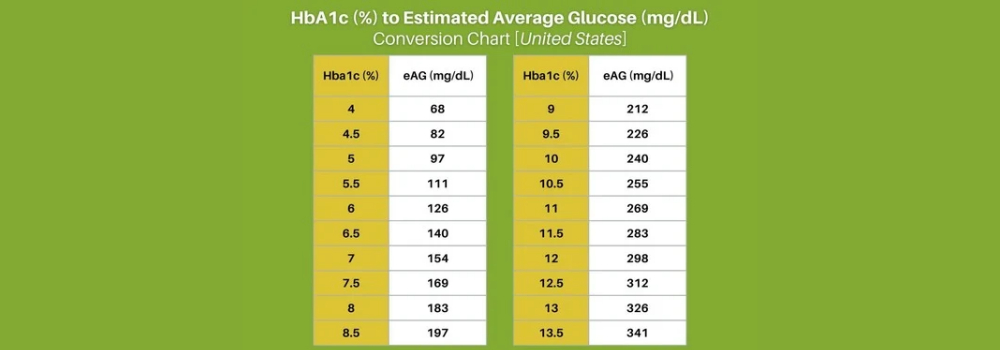
How Does A1C Relate to Average Blood Sugar?
One of the easiest ways to understand A1C is to compare it with estimated average glucose, or eAG. This converts the A1C percentage into the same mg/dL units commonly used by home glucose meters.
For example, an A1C of 7% corresponds to an estimated average glucose of approximately 154 mg/dL, while an A1C of 8% corresponds to approximately 183 mg/dL.
But remember: estimated average glucose is not the same thing as your fasting glucose or your blood sugar after a meal. Your glucose naturally changes throughout the day.
This is why someone can have an A1C of 7% while occasionally seeing readings above 180 or below 100 on a glucose meter.
Are There Symptoms of a High A1C?
An A1C number itself does not cause symptoms. Symptoms come from elevated blood glucose and the effects of high glucose on the body.
Some people with high blood sugar have noticeable symptoms, while others may feel completely normal. Possible symptoms of diabetes or persistent high blood glucose include increased thirst, frequent urination, increased hunger, fatigue, blurred vision, unexplained weight loss, slow-healing wounds, and recurrent infections.
This is one reason regular screening matters. You should not assume that your blood sugar is normal simply because you feel well.
If you have diabetes and develop severe symptoms such as vomiting, difficulty breathing, confusion, or other signs of a serious hyperglycemic problem, seek urgent medical attention.
Why Does A1C Increase?
A rising A1C generally means your average blood glucose has increased over time. There can be more than one reason for that change.
Dietary changes
Regularly eating more carbohydrate-containing foods or larger portions can raise blood glucose, particularly when meals are not balanced with adequate fiber, protein, and other nutrient-dense foods.
Less physical activity
Physical activity helps the body use glucose for energy. A major reduction in activity can make blood glucose harder to manage.
Insulin resistance
With insulin resistance, the body’s cells do not respond to insulin as effectively as they should. Over time, this can contribute to higher blood glucose and an increasing A1C.
Medication changes
Missing diabetes medication, stopping a medication, taking it differently than prescribed, or needing a different treatment plan can affect glucose control. Never stop or change prescription diabetes medication without discussing it with your healthcare provider.
Illness, stress, or other health changes
Illness and physical or emotional stress can affect blood glucose. Other health conditions and medications can also influence glucose control.
Diabetes progression
Type 2 diabetes can change over time. A treatment plan that previously kept your A1C near target may eventually need to be adjusted.
When Should You See a Doctor About Your A1C?
You should discuss your A1C with a healthcare professional if:
- Your A1C is 6.5% or higher and you have not previously been diagnosed with diabetes.
- Your A1C has increased compared with your previous test.
- Your A1C is consistently above your personal treatment goal.
- You are experiencing symptoms such as excessive thirst, frequent urination, unexplained weight loss, fatigue, or blurred vision.
- Your home glucose readings are consistently higher than your healthcare provider’s recommended range.
- You are having difficulty taking medications as prescribed or experiencing medication side effects.
- You are unsure what your A1C target should be.
Do not wait for symptoms before discussing an abnormal A1C. Diabetes and prediabetes can be present for some time without obvious symptoms.
How Is a High A1C Evaluated?
Your healthcare provider may review your A1C alongside other information rather than making decisions from the number alone.
Depending on your situation, evaluation may include an A1C repeat test, fasting plasma glucose, random plasma glucose, or an oral glucose tolerance test. For diabetes diagnosis, an A1C of 6.5% or higher, fasting plasma glucose of 126 mg/dL or higher, or a 2-hour glucose of 200 mg/dL or higher during an appropriate oral glucose tolerance test are diabetes-range results. A random plasma glucose of 200 mg/dL or higher can also be diagnostic when classic symptoms of hyperglycemia are present.
Your provider may also review medications, blood pressure, cholesterol, kidney health, weight, lifestyle factors, and other aspects of diabetes risk and management.
At Lifetime Primary Care, diagnostic testing includes routine blood work and diabetes screening, allowing appropriate testing to be incorporated into primary care when indicated.

How Can You Lower Your A1C?
If your A1C is higher than your personal goal, the best approach is usually a combination of sustainable lifestyle changes and appropriate medical treatment.
1. Understand your current numbers
Start by knowing your A1C, fasting glucose readings, after-meal readings if you monitor them, and the goal your healthcare provider has recommended for you.
2. Review your eating pattern
Rather than focusing only on eliminating one food, look at your overall eating pattern. Portion sizes, sugary drinks, refined carbohydrates, meal timing, fiber intake, and the balance of meals can all affect blood glucose.
3. Stay physically active
Regular physical activity can help your body use glucose more effectively. Your healthcare provider can help determine what type and amount of activity is appropriate for you.
4. Take medications as prescribed
If medication has been prescribed for diabetes, take it according to your treatment plan. If your A1C remains elevated, your provider may need to review the medication, dose, timing, or overall treatment approach.
5. Keep regular follow-up appointments
A1C is a long-term measurement, so improvement takes time. Regular follow-up allows your healthcare provider to identify trends and make changes when necessary.
Lifetime Primary Care provides chronic care management for long-term conditions such as diabetes, including monitoring, testing, treatment coordination, and patient education.
Can a Primary Care Doctor Help Lower My A1C?
Yes. A primary care doctor can play an important role in evaluating elevated A1C, diagnosing diabetes or prediabetes when appropriate, monitoring glucose control, reviewing medications, addressing cardiovascular risk factors, and coordinating additional care when needed.
For many people, diabetes management does not require seeing a specialist for every routine decision. A primary care physician can provide ongoing monitoring and help determine when additional specialist care may be appropriate.
At Lifetime Primary Care in Sugar Land, Dr. Misbah Kalair, MD, provides primary care for chronic conditions including diabetes and has more than 20 years of medical experience.
The clinic also offers diabetes-related diagnostic testing and chronic disease management, making primary care a practical starting point if you are concerned about an A1C of 6.5%, 7%, 8%, or higher.
Concerned About Your A1C?
An A1C of 6.5%, 7%, 8%, or higher deserves context—not panic. If you are concerned about your blood sugar or need help understanding your A1C results, a primary care visit can help you determine the next step.
Frequently Asked Questions About A1C Levels
What does an A1C of 6.5 mean?
An A1C of 6.5% is in the diabetes range used for diagnosis. If you do not have clear symptoms, your healthcare provider will generally confirm a diabetes-range result with repeat testing or another appropriate diabetes test before making the diagnosis.
Is an A1C of 7 considered diabetes?
Yes. An A1C of 7% is within the diabetes range for diagnosis. However, for someone who already has diabetes, an A1C of 7% is also a commonly recommended treatment target for many adults. Individual targets can be higher or lower depending on a person’s health and risk factors.
How dangerous is an A1C of 8?
An A1C of 8% is not usually an emergency by itself, but it is above the common target of 7% or less for many adults with diabetes. It corresponds to an estimated average glucose of approximately 183 mg/dL. Persistently elevated blood glucose can increase the risk of diabetes-related complications, so an A1C of 8% should be discussed with your healthcare provider.
What A1C level should I be concerned about?
An A1C of 6.5% or higher is important if you have not been diagnosed with diabetes because it is in the diabetes range. If you already have diabetes, concern depends on your individualized target and whether your A1C is rising or remaining above goal. An A1C of 8% or higher is generally a reason to review your diabetes management with your healthcare provider.
Can an A1C be high without symptoms?
Yes. Some people with elevated blood glucose have few or no noticeable symptoms. That is one reason A1C testing is useful for screening and monitoring diabetes.
Can you lower an A1C of 8%?
Many people can improve an elevated A1C through a combination of lifestyle changes and appropriate medical treatment. The right approach depends on why the A1C is elevated, your medications, other health conditions, and your individualized treatment goal.
How often should A1C be checked?
People with diabetes are generally advised to have A1C testing at least twice a year, although your healthcare provider may recommend testing more frequently when your treatment is changing or your A1C is not at goal.
Does an A1C of 6.5 mean I definitely have diabetes?
An A1C of 6.5% is in the diabetes range, but a diagnosis is generally confirmed with repeat testing or another appropriate test when there are no clear symptoms of diabetes. Conditions affecting red blood cells or hemoglobin can also affect the accuracy of an A1C result.
Final Takeaway: A1C 6.5, 7, 8 or Higher
A1C levels provide a useful picture of average blood glucose over the previous several months, but the number needs to be interpreted in context.
An A1C of 6.5% or higher is in the diabetes range for diagnosis. An A1C of 7% is a common treatment goal for many people who already have diabetes, while an A1C of 8% generally indicates that blood glucose has been above the desired range for many patients. Higher A1C levels deserve medical attention and a review of the factors affecting blood glucose control.
Most importantly, there is no single A1C number that is perfect for every person with diabetes. Your healthcare provider can help determine a reasonable goal based on your overall health and can monitor your progress over time.
If you are concerned about an A1C of 6.5%, 7%, 8%, or higher, consider discussing the result with your primary care physician rather than trying to interpret the number in isolation.
Medical Sources
National Institute of Diabetes and Digestive and Kidney Diseases (NIDDK):
The A1C Test & Diabetes
NIDDK:
Diabetes Tests & Diagnosis
American Diabetes Association:
Understanding A1C: What It Measures and Why It Matters
Centers for Disease Control and Prevention:
A1C Test for Diabetes and Prediabetes
Medical Disclaimer: This article is for general educational purposes only and is not a substitute for professional medical advice, diagnosis, or treatment. A1C targets and diabetes treatment plans vary from person to person. If you have an abnormal A1C or symptoms of high blood sugar, speak with a qualified healthcare professional for an appropriate evaluation.