

Burning when urinating can be uncomfortable, frustrating, and sometimes worrying. For many people, especially women, the first thought is a urinary tract infection (UTI). And a UTI is certainly one of the most common reasons for painful urination. However, burning or pain when you pee does not always mean you have a UTI.
Painful urination, medically called dysuria, can also happen because of irritation, vaginal or vulvar infections, sexually transmitted infections (STIs), bladder conditions, kidney stones, or other problems affecting the urinary or genital tract. Finding the actual cause matters because the right treatment depends on what is causing the burning.

Quick Answer: No. Burning when urinating does not always mean a UTI. A bladder infection is a common cause, but painful urination can also result from vaginal irritation or infection, STIs, urethral inflammation, kidney stones, or bladder conditions. If the burning persists, is severe, or occurs with fever, back or side pain, blood in the urine, vomiting, or pregnancy, medical evaluation is important.
In this guide, we will explain the most common causes of burning when urinating, how UTI symptoms differ from other conditions, what testing may be needed, when you should see a doctor, and how a primary care physician can help.
-
- What Does Burning When Urinating Mean?
- Does Burning When Peeing Always Mean a UTI?
- What Does UTI Burning Urination Usually Feel Like?
- What Causes Burning When Urinating?
- Why Does It Burn When Women Urinate?
- Can You Have a UTI Without Other Symptoms?
- Can an STI Cause Burning When Urinating?
- Can Vaginal Irritation Cause Painful Urination?
- Can Kidney Stones Cause Burning When Urinating?
- What Other Symptoms Should You Watch For?
- When Should You See a Doctor for Painful Urination?
- When Is Burning When Urinating an Emergency?
- How Is Painful Urination Diagnosed?
- What Urine Tests May Be Needed?
- How Is Burning When Urinating Treated?
- What Can You Do at Home While Waiting for Care?
- How Can You Prevent Burning When Urinating?
- Can a Primary Care Doctor Test and Treat a UTI?
- Burning When Urinating Care in Sugar Land, TX
- Frequently Asked Questions
- Final Takeaway
What Does Burning When Urinating Mean?
Burning when urinating refers to pain, discomfort, stinging, or a burning sensation while urine passes through the urinary tract. The discomfort may be felt near the opening of the urethra, deeper in the pelvis, or around the bladder.
The medical term for painful urination is dysuria. Dysuria is a symptom rather than a diagnosis. In other words, the burning tells you that something may be irritating or inflaming the urinary or genital area, but it does not tell you exactly what the underlying cause is.
A bladder infection is one possible cause. In adults, bladder infections commonly cause burning during urination along with frequent or urgent urination and lower abdominal discomfort. Urine may also appear cloudy, bloody, or have a strong odor. NIDDK notes that bladder infections can spread to the kidneys if they are not treated appropriately. :contentReference[oaicite:1]{index=1}
But other conditions can produce a very similar sensation. That is why persistent painful urination should not automatically be treated as a UTI without considering the full set of symptoms and, when appropriate, testing.
Does Burning When Peeing Always Mean a UTI?
No. Burning when peeing does not always mean a UTI.
A UTI is a common explanation, particularly when burning occurs together with urinary frequency, urgency, lower abdominal pressure, or changes in the urine. However, painful urination may also be caused by inflammation or irritation of the urethra, vaginal or vulvar conditions, sexually transmitted infections, kidney stones, or noninfectious bladder conditions.
For women, the distinction can sometimes be difficult because the urethra, vagina, vulva, and bladder are located close together. Irritation in one area can make urination uncomfortable even when there is no bladder infection.
MedlinePlus lists several causes of dysuria, including bladder infection, urethral irritation, vaginal infections, genital herpes, sexually transmitted infections, interstitial cystitis, and irritation caused by products such as bubble baths, perfumes, or lotions. :contentReference[oaicite:2]{index=2}
That is why the most useful question is not simply, “Do I have a UTI?” It is, “What is causing the burning when I urinate?”
What Does UTI Burning Urination Usually Feel Like?
UTI burning urination often feels like a sharp, stinging, or burning sensation as urine passes through the urethra. The discomfort may become especially noticeable toward the end of urination.
A bladder infection may also cause:
- A strong or frequent urge to urinate
- Passing only a small amount of urine at a time
- Pressure or discomfort in the lower abdomen
- Cloudy urine
- Strong-smelling urine
- Blood in the urine
- Burning or pain during urination
ACOG describes urgency, frequency, burning during urination, and lower abdominal or back discomfort as common UTI symptoms in women. :contentReference[oaicite:3]{index=3}
However, not everyone experiences all of these symptoms. Some people may notice burning as the main symptom, particularly early in an infection.
What Causes Burning When Urinating?
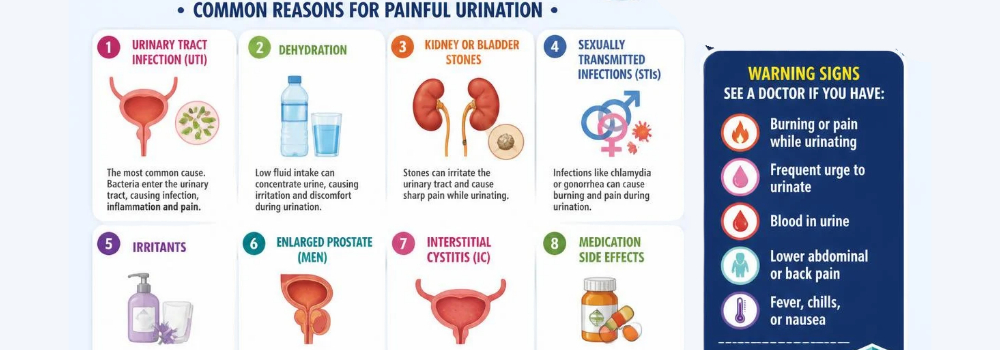
There are several possible causes of painful urination. The most likely cause depends on your age, sex, symptoms, medical history, medications, sexual health, and whether the discomfort is coming from the urinary tract or nearby genital tissues.
1. Urinary tract infection
A UTI is one of the most common causes of burning when urinating. A bladder infection occurs when bacteria enter the urinary tract and multiply. Most bladder infections are bacterial and can usually be treated with appropriate antibiotics when confirmed or strongly suspected by a healthcare professional. :contentReference[oaicite:4]{index=4}
2. Urethral irritation or inflammation
The urethra can become irritated or inflamed without a typical bladder infection. This can produce burning, discomfort, or pain during urination.
3. Vaginal or vulvar infection
Yeast infections and other vaginal or vulvar conditions may cause irritation around the urinary opening. When urine contacts inflamed tissue, it can sting or burn.
4. Sexually transmitted infections
Some STIs, including chlamydia and gonorrhea, can cause burning during urination. Importantly, STIs can sometimes have few or no symptoms, so urinary burning may be an important reason to discuss sexual health testing with a healthcare provider when appropriate. :contentReference[oaicite:5]{index=5}
5. Kidney stones
Kidney stones can irritate the urinary tract and cause urinary symptoms. They are more commonly associated with significant pain in the back, side, lower abdomen, or groin, particularly when a stone moves through the urinary tract.
6. Bladder conditions
Some people experience bladder pain and urinary symptoms without a bacterial infection. One example is interstitial cystitis or bladder pain syndrome. Noninfectious cystitis can cause bladder pressure, pelvic discomfort, and painful urination. :contentReference[oaicite:6]{index=6}
7. Irritation from personal-care products
Bubble baths, scented soaps, feminine hygiene products, perfumes, lotions, and other chemicals can irritate sensitive genital tissue. If the burning started after using a new product, irritation may be part of the explanation.
Why Does It Burn When Women Urinate?
Burning pee in women is particularly common because women are more likely to develop bladder infections. The female urethra is shorter and located closer to the anus, which can make it easier for bacteria to reach the bladder. :contentReference[oaicite:7]{index=7}
But a woman with painful urination does not automatically have a UTI.
For example, burning can occur when urine passes over irritated vulvar or vaginal tissue. Vaginal infections, genital irritation, herpes, and some STIs can produce symptoms that feel similar to a urinary infection.
This is why symptoms such as vaginal discharge, genital itching, sores, unusual odor, pelvic pain, or bleeding between periods are important to mention to your healthcare provider.
Note: If burning when urinating occurs with unusual vaginal discharge, genital sores, pelvic pain, or bleeding between periods, do not assume it is simply a UTI. Additional testing may be appropriate.
Can You Have a UTI Without Other Symptoms?
Yes, it is possible for urinary symptoms to be limited or mild, especially early in an infection. Burning may sometimes be the symptom that gets your attention first.
At the same time, burning alone does not prove that a UTI is present. Your healthcare provider may consider the duration of symptoms, your medical history, other urinary symptoms, and urine testing when determining whether an infection is likely.
If burning continues or becomes worse, getting evaluated is generally more useful than repeatedly treating yourself for a presumed UTI.
Can an STI Cause Burning When Urinating?
Yes. Certain STIs can cause dysuria.
For example, CDC information on chlamydia notes that women who have symptoms may experience abnormal vaginal discharge or burning when peeing. Gonorrhea can also cause painful or burning urination in women, although many women with gonorrhea have no symptoms or symptoms that may be mistaken for another type of infection. :contentReference[oaicite:8]{index=8}
This does not mean that burning automatically indicates an STI. It simply means that STI testing may need to be considered based on your symptoms and sexual history.
Because many STIs can occur without noticeable symptoms, a healthcare professional can help determine which tests are appropriate. The CDC recommends discussing STI testing with a healthcare provider based on factors such as symptoms, sexual history, and current sexual practices. :contentReference[oaicite:9]{index=9}
Can Vaginal Irritation Cause Painful Urination?
Yes. This is an important reason why painful urination in women is not always a bladder infection.
If the vulva or vaginal tissue becomes inflamed or irritated, urine passing over the affected area may cause stinging or burning. Possible triggers include yeast infections, other vaginal infections, scented products, soaps, bubble baths, and certain personal-care products.
The location of the discomfort can sometimes provide a clue. Burning that feels mainly on the outside when urine touches irritated skin may have a different cause from burning that feels deeper inside the urinary tract.
However, symptoms overlap, so it is not always possible to determine the cause based on sensation alone.
Can Kidney Stones Cause Burning When Urinating?
Kidney stones can cause urinary discomfort, although their symptoms often include more significant pain elsewhere in the urinary tract.
A stone may cause severe pain in the side or back that can move toward the lower abdomen or groin. Some people may also have blood in the urine, nausea, vomiting, or urinary symptoms.
Because kidney stones and urinary infections can sometimes produce overlapping symptoms, significant pain, blood in the urine, fever, or persistent urinary symptoms should be medically evaluated.
What Other Symptoms Should You Watch For?
The symptoms accompanying burning when urinating can help your healthcare provider determine what may be happening.
| Symptoms | Possible concern |
|---|---|
| Burning + frequent urination | Bladder infection or another urinary condition |
| Burning + urgency | UTI or bladder irritation |
| Burning + vaginal discharge | Vaginal infection or STI |
| Burning + genital sores | Possible genital infection, including herpes |
| Burning + blood in urine | UTI, stone, or another urinary condition |
| Burning + fever/chills | Possible infection requiring prompt medical evaluation |
| Burning + back/side pain | Possible kidney infection or kidney stone |
The combination of symptoms matters. A healthcare professional can determine whether urine testing, STI testing, a physical examination, or another evaluation is appropriate.
When Should You See a Doctor for Painful Urination?
You should contact a healthcare provider if painful urination lasts, keeps returning, or is accompanied by other concerning symptoms.
MedlinePlus recommends contacting a healthcare professional for painful urination that lasts more than one day, blood in the urine, fever, genital discharge, or painful urination during pregnancy. :contentReference[oaicite:10]{index=10}
You should also seek medical care if you have:
- Frequent or urgent urination along with burning
- Lower abdominal or pelvic discomfort
- Cloudy, bloody, or unusually strong-smelling urine
- Vaginal or penile discharge
- Genital sores or irritation
- Repeated episodes of painful urination
- Symptoms after sexual activity that concern you
- Symptoms that do not improve
If you are pregnant and have painful urination, contact your healthcare provider rather than assuming the symptoms will resolve on their own.
When Is Burning When Urinating an Emergency?
Burning by itself is usually not an emergency. However, it can occur alongside symptoms of a more serious infection or urinary problem.
Seek urgent medical attention if burning when urinating occurs with:
- High fever or shaking chills
- Severe pain in the back, side, or abdomen
- Repeated vomiting
- Confusion, severe weakness, or fainting
- Significant blood in the urine
- Inability to urinate
- Rapidly worsening symptoms
Fever, chills, nausea, vomiting, and back or side pain can be warning signs that a urinary infection has reached the kidneys. Kidney infections can become serious and require prompt treatment. :contentReference[oaicite:11]{index=11}
If you believe you are experiencing a life-threatening emergency, call 911 or go to the nearest emergency department.
How Is Painful Urination Diagnosed?
Diagnosing dysuria starts with understanding exactly what you are experiencing.
Your healthcare provider may ask:
- When did the burning begin?
- Does it happen throughout urination or mainly at the beginning or end?
- Are you urinating more frequently?
- Do you have urinary urgency?
- Do you have lower abdominal, pelvic, back, or side pain?
- Have you noticed blood in your urine?
- Do you have vaginal or penile discharge?
- Have you noticed genital itching, irritation, or sores?
- Have you recently used a new soap, bath product, or personal-care product?
- Could pregnancy be possible?
- Could an STI be a possibility?
Depending on your symptoms, the provider may perform a physical examination and order urine testing or other tests. NIDDK notes that bladder infection diagnosis may involve medical history, physical examination, urinalysis, urine culture, blood tests, and, in some situations, imaging or other testing. :contentReference[oaicite:12]{index=12}
What Urine Tests May Be Needed?
A urinalysis is commonly used when a UTI is suspected. It examines the urine for findings such as white blood cells and blood that can help identify inflammation or infection.
A urine culture may also be used to identify bacteria and help determine which antibiotics may be appropriate when a bacterial infection is present. :contentReference[oaicite:13]{index=13}
Not every person with burning urination needs every test. Testing is selected based on symptoms, medical history, risk factors, previous infections, and the clinical examination.
At Lifetime Primary Care, in-office diagnostic testing includes urinalysis, along with other diagnostic services. This can be useful when evaluating urinary symptoms and other acute conditions. :contentReference[oaicite:14]{index=14}
For more information, you can learn about diagnostic testing at Lifetime Primary Care.
How Is Burning When Urinating Treated?
Treatment depends entirely on the cause.
If the cause is a bacterial UTI
A bacterial bladder infection is commonly treated with antibiotics prescribed by a healthcare professional. The specific medication and duration depend on factors such as the infection, symptoms, medical history, allergies, and whether infections have occurred repeatedly. :contentReference[oaicite:15]{index=15}
If the cause is an STI
STIs require the appropriate diagnosis-specific treatment. The medication used depends on which infection is present. Sexual partners may also need evaluation and treatment depending on the infection.
If the cause is a vaginal infection
Treatment depends on whether the underlying problem is yeast, bacterial, or another type of infection. Using an over-the-counter product without knowing the cause may delay appropriate treatment.
If the cause is irritation
If a personal-care product is causing irritation, stopping the suspected irritant may help. Your provider can also recommend appropriate treatment if inflammation is significant.
If the cause is a noninfectious bladder condition
Conditions such as interstitial cystitis require a different treatment approach from a bacterial UTI. Antibiotics will not treat a nonbacterial bladder condition.
This is one reason it is important not to assume that every episode of burning urination requires antibiotics.
What Can You Do at Home While Waiting for Care?
If your symptoms are mild and you are arranging medical evaluation, staying hydrated may help you maintain normal urine flow. Water is generally the best choice for hydration.
NIDDK notes that drinking adequate fluids can help with recovery from a bladder infection, although people with certain medical conditions may need individualized fluid guidance. :contentReference[oaicite:16]{index=16}
You can also avoid products that seem to irritate the genital area, such as strongly scented soaps, bubble baths, or fragranced sprays.
Do not use leftover antibiotics or someone else’s prescription. If the cause is not a bacterial UTI, antibiotics will not address the underlying problem and unnecessary antibiotic use can contribute to resistance.
How Can You Prevent Burning When Urinating?
Not every cause of dysuria can be prevented, but several habits can reduce the risk of urinary irritation and some UTIs.
Stay adequately hydrated, avoid unnecessary irritating products around the genital area, and seek medical care when urinary symptoms begin rather than allowing a possible infection to progress.
For people who experience recurrent UTIs, a healthcare provider can review possible triggers and risk factors and discuss appropriate prevention strategies.
Sexual health also matters. If you are sexually active and have a possible STI exposure or symptoms such as discharge, sores, bleeding between periods, or burning with urination, appropriate STI testing can help identify infections that may otherwise be missed. :contentReference[oaicite:17]{index=17}
Can a Primary Care Doctor Test and Treat a UTI?
Yes. A primary care doctor can evaluate symptoms of a possible UTI, order appropriate testing, and provide treatment when a bacterial infection is diagnosed or clinically appropriate.
Primary care is also useful because burning when urinating is not always a UTI. A physician can look at the broader picture and determine whether you may need urine testing, STI testing, examination for vaginal or vulvar conditions, or another type of evaluation.
Lifetime Primary Care in Sugar Land provides primary care for acute illnesses and offers in-office diagnostic testing, including urinalysis. The practice also lists pain on urination and urinary frequency among symptoms treated through its walk-in primary care services. :contentReference[oaicite:18]{index=18}
You can learn more about the clinic’s walk-in primary care services in Sugar Land if you need evaluation for a non-life-threatening urinary concern.
Burning When Urinating Care in Sugar Land, TX
If you are experiencing burning when urinating, you do not necessarily need to figure out the cause on your own. A primary care evaluation can help determine whether your symptoms are consistent with a UTI or whether another condition should be considered.
Lifetime Primary Care provides primary care, women’s health care, wellness services, and diagnostic testing in Sugar Land. The practice is located at 16645 W Airport Blvd, Sugar Land, TX 77498, and is open Monday through Friday from 8:30 AM to 5:00 PM. :contentReference[oaicite:19]{index=19}
You can also learn more about Dr. Misbah Kalair, MD, a family medicine specialist with more than 20 years of experience. :contentReference[oaicite:20]{index=20}
If you have persistent urinary symptoms, recurrent UTIs, or other ongoing health concerns, primary care can also provide continuity of care rather than treating each episode in isolation.
Experiencing Burning When You Urinate?
Burning when urinating can have several causes, and the right treatment starts with finding the cause. If you are in Sugar Land, a primary care evaluation and appropriate testing can help determine what may be causing your symptoms.
Frequently Asked Questions
Why does it burn when I urinate?
Burning when urinating can be caused by a UTI, urethral irritation, vaginal or vulvar infection, STI, kidney stone, or certain bladder conditions. A urine test and medical evaluation may be needed to identify the cause.
Does burning when peeing always mean a UTI?
No. A UTI is a common cause of painful urination, but it is not the only cause. Vaginal irritation, STIs, kidney stones, urethral inflammation, and noninfectious bladder conditions can also cause burning.
Can I have a UTI without other symptoms?
It is possible to have mild or limited urinary symptoms, particularly early in an infection. However, burning alone does not confirm a UTI. A healthcare professional may recommend urine testing depending on your symptoms and medical history.
Can a UTI cause burning without frequent urination?
Yes. UTI symptoms can vary from person to person. Burning may occur without every typical symptom. However, because burning has many possible causes, persistent symptoms should be evaluated rather than automatically assumed to be a UTI.
Can an STI cause burning when urinating?
Yes. Chlamydia and gonorrhea can cause burning or painful urination, although many people with these infections have no symptoms. Other symptoms may include discharge or bleeding between periods. Appropriate testing can determine whether an STI is present. :contentReference[oaicite:21]{index=21}
When should I see a doctor for painful urination?
See a healthcare provider if the burning persists, returns repeatedly, lasts more than a day, or occurs with fever, blood in the urine, discharge, pelvic pain, back or side pain, or other concerning symptoms. Pregnant people with painful urination should contact their healthcare provider. :contentReference[oaicite:22]{index=22}
What tests might a doctor order for painful urination?
Depending on your symptoms, testing may include urinalysis, urine culture, STI testing, blood tests, or other examinations or imaging. The appropriate tests depend on the suspected cause.
Can a primary care doctor test and treat a UTI?
Yes. A primary care doctor can evaluate urinary symptoms, perform or order appropriate testing, and prescribe treatment when a bacterial UTI is diagnosed or otherwise clinically appropriate. Lifetime Primary Care offers in-office urinalysis as part of its diagnostic testing services. :contentReference[oaicite:23]{index=23}
Final Takeaway
Burning when urinating is common, but it is not always a UTI. A bladder infection is one of the most frequent causes, particularly when burning occurs with urinary urgency, frequency, lower abdominal discomfort, or changes in urine.
However, dysuria can also be caused by vaginal or vulvar irritation, STIs, urethral inflammation, kidney stones, or noninfectious bladder conditions. The symptoms may overlap, so persistent or recurrent burning deserves proper evaluation rather than repeated self-treatment.
If you develop fever, chills, vomiting, severe back or side pain, significant blood in the urine, inability to urinate, or rapidly worsening symptoms, seek urgent medical attention because these can indicate a more serious urinary problem.
For non-life-threatening symptoms in the Sugar Land area, a primary care physician can help evaluate the cause, perform appropriate testing, and determine the right treatment.
Medical Sources
NIDDK: Bladder Infection (Urinary Tract Infection—UTI) in Adults — symptoms, causes, diagnosis, and treatment.
MedlinePlus: Painful Urination (Dysuria) — causes, evaluation, and when to contact a healthcare professional.
ACOG: Urinary Tract Infections (UTIs) — UTI symptoms, diagnosis, treatment, and kidney infection warning signs.
CDC: Getting Tested for STIs — STI testing guidance, including testing for chlamydia and gonorrhea.
Medical Disclaimer: This article is intended for general educational purposes and does not replace professional medical advice, diagnosis, or treatment. Burning when urinating can have multiple causes, and symptoms alone may not be enough to determine the underlying condition. If you have persistent, severe, or worsening symptoms, consult a qualified healthcare professional. If you are experiencing a medical emergency, call 911 or seek emergency medical care.